




Find yourself wondering why your hair feels full some days and other times it seems like you're shedding more than usual? It's actually all part of the natural process your hair goes through, and it's called the hair growth cycle.
Between starting to grow and falling out years later, each individual hair passes through four stages. And here's the kicker: At any given time, each strand is at a different stage of the hair growth cycle, meaning some of your individual hairs are thriving while others are planning their exit.
The hair growth cycle

01. Growth phase
(Scientific name: Anagen) — Everyone's favorite phase— the time when your hair is actively growing. It can last anywhere from a few years to several years, depending on genetics and overall health.


As we age, the growth phase can shorten
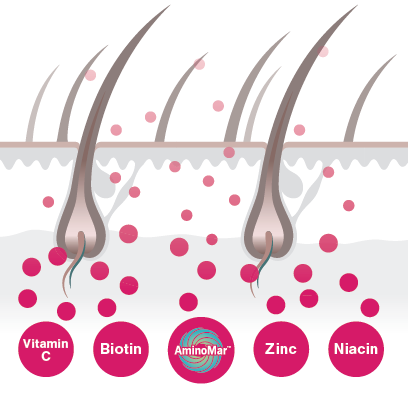
When that happens, hair may grow back thinner, weaker, or not as long as before — which is why supporting your scalp with the right nutrients is so important for maintaining healthy hair growth.
Let's talk hair loss
We all shed hair daily, but if you're noticing more hair in your brush, shower, or on your pillow, it might mean your cycle has been disrupted. Hair loss above the normal range can be caused by a variety of factors. Let's go over some:
This is an autoimmune disorder that causes the immune system to attack hair follicles, typically resulting in a patchy type of hair loss. It typically begins with small, circular patches of hair loss on the scalp, but can also affect other body hair like eyebrows or beards. There is no cure, but hair treatments and certain nutrients can help stimulate regrowth.
Female Pattern Hair Loss


Male Pattern Hair Loss


Also quite common, this is a type of temporary hair loss that is caused by a specific stressor, like:
Hormonal changes
(Pregnancy, postpartum, perimenopause, menopause)
Medical conditions
(Like hypothyroidism or iron deficiency)
Physical stress
(Childbirth, major surgery, illness, or trauma)
Emotional stress
Starting or stopping a medication
Body weight changes
Change in diet
These stressors can trigger a large number of hairs to enter the resting (Telogen) phase of the hair cycle, ultimately resulting in excessive hair shedding (more than 50-100 hairs a day).
This is an autoimmune disorder that causes the immune system to attack hair follicles, typically resulting in a patchy type of hair loss. It typically begins with small, circular patches of hair loss on the scalp, but can also affect other body hair like eyebrows or beards.
This is a type of sudden hair loss that happens due to damaged hair follicles, often from chemotherapy. It affects hair on both the scalp and the body. Anagen Effluvium is generally reversible, but the underlying factor causing the loss must be removed. Supplements alone cannot remedy the hair loss.
This is hair loss caused by prolonged pulling on hair follicles. Tight ponytails, buns, braids, cornrows, dreadlocks, extensions, and hair weaves can all lead to stress on the hair follicle, and thus, thinning. If caught early, simply avoiding the tight hairstyle can lead to regrowth. For more severe or persistent cases, treatment can help.
NOTE: If you're concerned about hair loss, it's best to check in with your healthcare provider. They can help determine the cause and guide you toward the right support or treatment. Viviscal products are not intended to diagnose, treat, cure, or prevent any disease.
Our hair changes a lot throughout life — it's all totally natural
Even so, hair loss is still difficult, emotional, and can make you feel vulnerable no matter the reason. But you're not alone. With the right nutrition, self-care, and stress management, you can help keep your strands healthy and thriving.
Proven Results